
As someone who”s spent a lifetime with a guitar in hand, riding the highs and lows of a musician’s life from dusty Southern bars to crisp Danish festivals, I”ve always known music was more than just entertainment. It”s a lifeline, a language, a way the soul speaks and heals. But beyond my own experiences, science is increasingly tuning into just how profoundly music impacts our mental health and wellbeing. It”s a fascinating harmony of art and biology, one that resonates deeply with both the performer on stage and the listener lost in a melody, affecting our socioemotional development and overall quality of life.
The Unseen Symphony: Music’s Deep Dive into Our Brains and Emotions
It’s easy to think of music as something that just washes over us, a pleasant background to our lives. But beneath the surface, an intricate dance is happening within our brains. Engaging with music, whether listening or playing, isn’t a passive activity for our grey matter. Research highlights how it can stimulate neuronal connections and promote neuroplasticity, essentially helping our brains stay flexible and adaptive. Different parts of the brain light up in response to various musical elements: the cerebellum processes rhythm, the frontal lobes decode emotional cues from music, and a specific part of the right temporal lobe helps us understand pitch, as noted by Medical News Today. And that incredible feeling, those ‘musical shivers’ or ‘chills’ we sometimes get? That”s often linked to activity in the brain’s reward system, including regions like the ventral striatum, amygdala, medial prefrontal cortex, and nucleus accumbens, releasing dopamine, the same chemical involved in pleasure from food or love, as detailed by the British Psychological Society. It”s a biological testament to music”s power, activating nearly every brain region mapped so far.
Emerging ideas like the Neural Resonance Theory, discussed in studies highlighted by Neuroscience News and McGill University, suggest something even more profound: that our brains and bodies don’t just *hear* music, they physically *resonate* with it, synchronizing with its rhythms and melodies. This isn’t just about learned associations; it’s a fundamental physical interaction, suggesting our brains and bodies ‘become’ the music. This deep connection helps explain why music can stir such a vast ocean of feelings. Researchers at UC Berkeley have even mapped at least 13 core emotions that music can evoke, including joy, sadness, relaxation, triumph, anxiety, fear, and even feeling ‘pumped up’. Of course, as any musician who”s tried to win over a tough crowd knows, these emotional responses are beautifully complex, colored by our personal histories, the memories a particular song might unlock, and even our mood or surroundings at the time of listening. Understanding these responses can even tie into The Psychological Benefits of Music Improvisation, where spontaneous creation meets emotional expression.
The Healing Playlist: Music as a Therapeutic Ally
This profound connection between music and our inner world hasn’t gone unnoticed. Music therapy has blossomed into a recognized clinical profession, with a growing body of research underscoring its effectiveness. Organizations like the British Association for Music Therapy (BAMT) actively support research to demonstrate its impact and ensure high standards. Effective collaboration and knowledge sharing are vital for such organizations and the broader music therapy community. Utilizing tools like a well-structured intranet site can be incredibly beneficial for these groups to coordinate research projects, disseminate findings, and share best practices among professionals, thereby fostering growth and maintaining high standards across the field. Music therapy is a field dedicated to using music intentionally to achieve therapeutic goals, whether that involves actively creating music or engaging in deep listening. As Verywell Mind explains, music therapy can be an active process where clients participate in making music, or a passive one involving listening and responding, often tailored to the individual’s needs. No prior musical talent is required to benefit from its positive effects!

Targeting Specific Storms: Music’s Role in Common Mental Health Challenges
One of the most well-documented benefits of music is its ability to soothe the frayed nerves of anxiety. I’ve seen it backstage before a big show, that quiet hum of a familiar tune calming a jittery bandmate. Science backs this up: numerous studies, summarized by the NCCIH, show music interventions can significantly reduce anxiety in various settings, from patients awaiting surgery and adults with cancer to individuals receiving hemodialysis. A meta-analysis in the Annals of Medicine and Surgery found music therapy particularly effective in lowering anxiety (as measured by the State-Trait Anxiety Inventory) and improving physiological markers like heart rate, systolic blood pressure, and respiratory rate in patients undergoing cardiac procedures. Even in pediatric care, the results are striking. Data from Great Ormond Street Hospital showed that 100% of parents and caregivers reported music therapy as extremely or very helpful in reducing their child’s anxiety levels and helping them express emotions. Music therapy also positively impacted parents’ and caregivers’ anxiety and mood.
Beyond anxiety, music offers a supportive hand in managing depression and stress. While it’s not a replacement for comprehensive treatment, adding music-based interventions to standard care can improve depressive symptoms and enhance overall functioning, helping people re-engage with work, activities, and relationships. The Translational Psychiatry journal highlights studies where music interventions significantly reduced depression levels, sometimes with effects comparable to traditional behavioral therapies. When it comes to stress, that everyday beast many of us battle, music therapy can help improve both physiological markers like heart rate and stress hormone levels (cortisol), and psychological ones like worry and restlessness. It”s like finding the right rhythm to counter the chaotic beat of a stressful day, a principle that also applies to how Planning Time Boosts Musical Productivity for us musicians.
And let’s not forget the physical manifestations of mental distress. Music has shown remarkable potential in pain management. As Healthline points out, music can help people manage both acute and chronic pain, sometimes more effectively than medication alone, by altering the body’s response to pain. This can be a game-changer for overall wellbeing, potentially reducing the need for pain medication. For those tossing and turning at night, while results from NCCIH are mixed, some evidence suggests music interventions can improve subjective sleep quality in adults with insomnia. Finding that perfect, calming melody can be like a lullaby for the restless mind.
Diverse Approaches in Music Therapy
The world of music therapy is as diverse as music itself. It’s not just one-size-fits-all. Therapists draw from various established methods, each with its unique approach. For instance, Analytical Music Therapy encourages an improvised musical ‘dialogue’ through song or instruments to explore unconscious thoughts, which are then discussed. The Nordoff-Robbins approach, or creative music therapy, often involves playing an instrument (like a cymbal or drum) alongside the therapist to foster self-expression. Cognitive Behavioral Music Therapy (CBMT) integrates music with CBT (Cognitive Behavioral Therapy) principles to reinforce or modify behaviors. Then there’s the Bonny Method of Guided Imagery and Music (GIM), which uses classical music to stimulate the imagination and explore inner experiences, as detailed by Verywell Mind. Other approaches include Benenzon Music Therapy, which seeks a ‘musical sound identity’ by matching external sounds to one’s internal psychological state, and Vocal Psychotherapy, using voice and breathwork to connect with emotions. This rich tapestry of techniques allows therapists to tailor sessions to individual needs and goals, making it a deeply personal journey of healing.
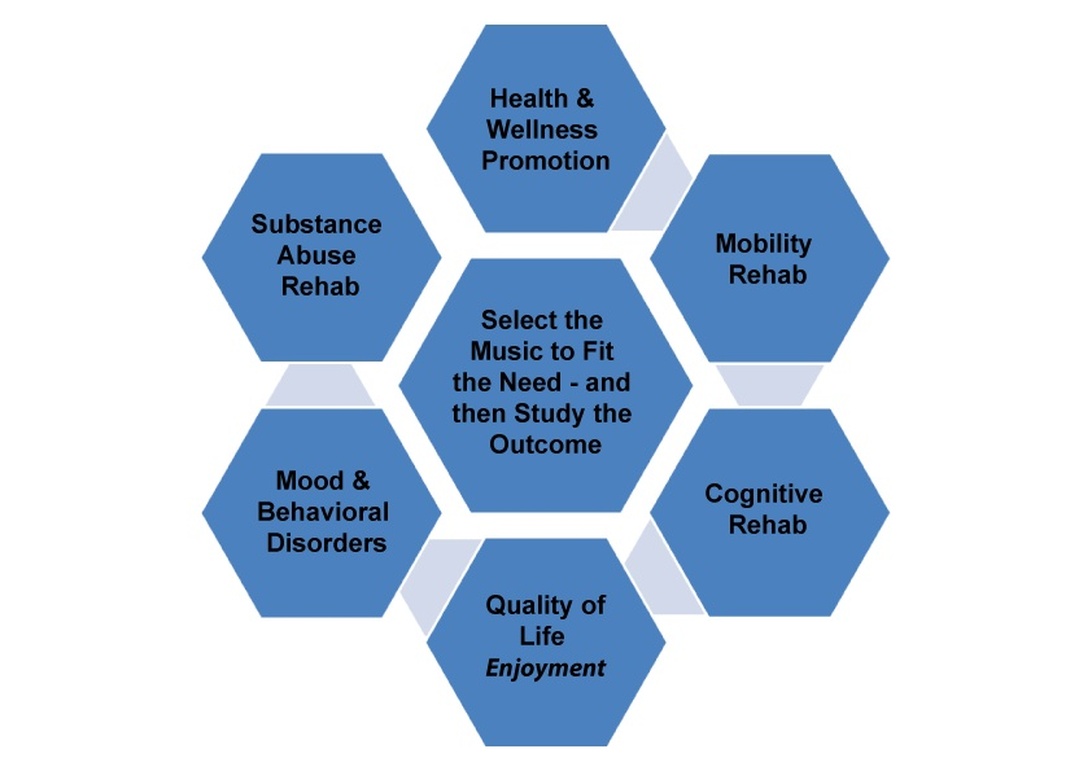
Crafting Your Personal Soundtrack: How We Use Music for Wellbeing
Beyond formal therapy, most of us instinctively use music to navigate our emotional landscapes. Research outlined in a PMC article identifies three key psychological functions of music listening: self-awareness (using music for reflection, coping, finding meaning, and even escapism), arousal and mood regulation (using music to energize, relax, or distract), and social relatedness (using music to connect with others and express identity). I know for me, there are certain jazz pieces I turn to for deep thought, and upbeat country tunes that instantly lift my spirits before a gig. It’s about curating our own personal soundtrack for life’s various scenes. This act of personal curation is powerful; one might select upbeat electronic music to energize a workout, serene classical pieces for focused study, or calm ambient tracks to unwind before sleep, tailoring the sound to the need.
The way we engage with music also matters. Actively making music, for example, singing in a choir, strumming a guitar, or even just drumming on the steering wheel, can offer different benefits than passively listening, improving skills like memory and coordination. Social music experiences, like attending concerts or playing in a band, are strongly linked to higher wellbeing and prosocial behavior, as noted in Translational Psychiatry. It”s that shared rhythm, that collective voice. Psychology Today breaks down music’s power into four core elements: tonality (conveying emotion through harmony and melody), rhythm (prompting movement and synchrony), reward (the pleasure response activating brain circuits), and pro-social affiliation (social bonding through shared musical activities). These elements work together to create music’s profound impact.
However, the ‘right’ music is deeply personal. What one person finds uplifting, another might find irritating. As TIME magazine points out, the wrong kind of music can even promote rumination or stress; slow-tempo music with gradual chord progressions and sustained notes tends to be calming, while fast, chaotic music can be agitating. It’s crucial to consider individual preferences. Research also distinguishes between ‘healthy’ music engagement (like using music for relaxation or social connection) and potentially ‘unhealthy’ patterns (like using music for emotional discharge in isolation), which can be associated with more negative mental states. It”s also fascinating that not everyone experiences music’s emotional pull; a small percentage of people, around 4 to 5 percent, experience ‘musical anhedonia,’ feeling little pleasure from music, while others, ‘musicophiles,’ experience unusually high enjoyment, as highlighted by sources like the British Psychological Society.
Beyond the Applause: Navigating Music’s Complexities and Future Harmonies
While the spotlight often shines on music’s benefits, it’s important to strike a balanced chord. Music isn’t a magic bullet. As mentioned, certain music can indeed amplify negative feelings like anger or sadness for some individuals. The relationship between music and mental health is complex. For instance, some correlational studies cited in Translational Psychiatry suggest that musicians, like myself and many I know, might have a higher predisposition for certain internalizing issues like anxiety or depression. However, these studies also often indicate that we use our deep engagement with music as a powerful coping mechanism. It”s a double-edged sword sometimes, but one we learn to wield for our wellbeing, perhaps even influencing The Best Outfits For Musicians as a form of self-expression and confidence building.
The field is ripe for more exploration. While we have compelling evidence, researchers acknowledge the need to delve deeper into the precise neurophysiological mechanisms behind music’s effects and to conduct more systematic evaluations of its long-term impact, as emphasized in the Frontiers in Psychiatry study. The quality of clinical research and the development of robust evidence bases, as championed by organizations like BAMT, are vital for music therapy to continue to grow and gain wider acceptance and integration into healthcare. Future studies using neuroimaging, genetic research, and large-scale databases will be key.
From the grand concert halls to the quiet hum of headphones, music weaves itself into the fabric of our lives. Its power to touch our minds and hearts, to heal and connect, is undeniable. As we continue to unravel the intricate relationship between sound and psyche, one thing remains clear: music is more than just notes and rhythms. It’s a fundamental human experience, a companion on our journey, and an ever-evolving soundtrack to our collective and individual wellbeing. The quest to fully understand and harness its therapeutic potential is an exciting encore that promises richer, more harmonious lives for us all.
